Lake Erie Experiences Dramatic 20-Foot Seiche Split as Water Drains Near Toledo and Surges in Buffalo During Powerful Wind Event
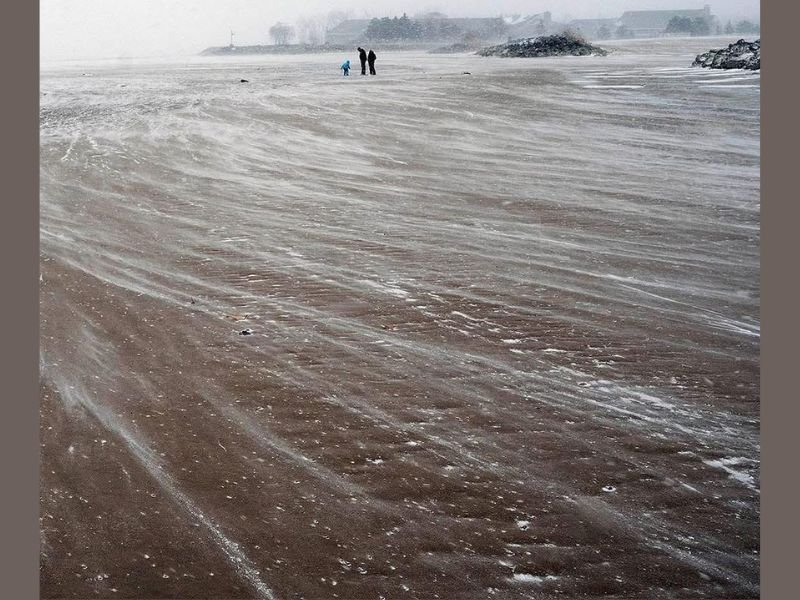
OHIO — A powerful wind-driven seiche on Lake Erie created stunning and dangerous conditions across the region today, exposing vast stretches of lakebed near Toledo while water levels simultaneously surged more than a dozen feet higher on the New York side of the lake. The dramatic event, captured in a striking photo from Maumee Bay State Park, revealed breakwater barriers normally submerged — with no water in sight.
Seiche Drops Water Nearly 8 Feet in Toledo
According to observers along the western basin, Lake Erie’s water level fell nearly 7.5 feet near Toledo as strong winds pushed enormous volumes of water toward the east end of the lake. The exposed lakebed allowed visitors to walk on what is usually underwater, creating rare images of people standing where waves typically roll.
This dramatic water displacement made breakwater structures fully visible, showcasing just how far the water had receded. Weather specialists say such events are uncommon and typically require a combination of strong, sustained winds and specific atmospheric pressure patterns.
Massive Water Rise Reported in Buffalo
While Ohio’s shoreline temporarily looked like a desert, the opposite occurred in western New York. Reports from Buffalo indicate that water levels on the eastern end of Lake Erie rose nearly 13 feet, driven by the same wind event.
The area also experienced extraordinary wind conditions, with hurricane-force gusts recorded along the shoreline. Buffalo registered a 79 mph wind gust, a near-record reading for the region and strong enough to push water into low-lying areas and strain coastal defenses. Local meteorologists stated that today’s seiche ranks among the most impressive and extreme occurrences of the past decade.
Wind Gusts Fuel Regionwide Impacts
Residents throughout northern Ohio and western New York reported dangerous crosswinds, rapidly changing shorelines, and hazardous conditions for anyone on or near the lake. Emergency management officials warned that such seiches can result in sudden flooding on one side of the lake and severe water loss on the other, creating risks for boats, docks, and shoreline infrastructure.
The event also underscores the power of winter wind storms across the Great Lakes, where shallow waters and long fetch distances create ideal conditions for rapid water displacement.
A Rare Glimpse at the Lakebed
The photo taken at Maumee Bay State Park shows an expansive stretch of bare lakebed appearing almost like a frozen tidal flat. Families were seen cautiously walking along the exposed ground, which is normally submerged under several feet of water.
Experts caution that while visually striking, exposed lakebeds can still be unstable and icy, making conditions slippery or unsafe in some sections. As the Great Lakes region continues to experience high-impact wind events this winter, readers are invited to share their experiences, photos, or local weather observations at SaludaStandard-Sentinel.com.