Christmas Eve Arctic Blast Forecast to Bring Extreme Cold to Georgia, Alabama, Mississippi, the Carolinas, and Florida
UNITED STATES — New long-range Christmas Eve weather model runs indicate a potentially powerful Arctic blast pushing deep into Georgia, Alabama, Mississippi, the Carolinas, and Florida, raising concerns of dangerous cold across large parts of the Southeast and Gulf Coast. While confidence remains moderate due to the event still being several days out, the consistency of the model trend has gained significant attention.
Models Show Bitter Cold Reaching Deep Into the Southeast
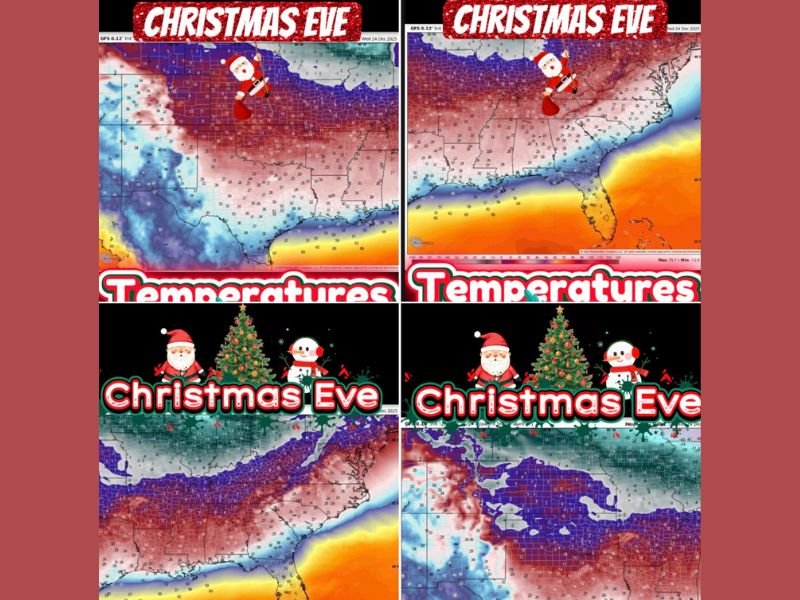
The latest model graphics show a surge of Arctic air stretching from the Midwest down through the Southeast, with subfreezing temperatures possible across Georgia, Alabama, Mississippi, North Carolina, South Carolina, and even portions of northern and central Florida.
Color-coded temperature maps highlight blue and purple anomalies, indicating temperatures far below seasonal averages and wind chills that could pose risks to residents, pets, and property.
This type of pre-Christmas cold front is unusual for the region, sparking widespread discussion among meteorologists and weather watchers.
Potential Impacts on Holiday Travel and Outdoor Decorations
If the current model projections verify, the cold blast could disrupt typical holiday activities across the states affected.
Residents may face:
- Hard freezes capable of damaging pipes and plants
- Hazardous wind chills, especially overnight
- Increased travel concerns during one of the nation’s busiest holiday weekends
Outdoor holiday decorations could also be affected. Inflatable displays and string lights may malfunction or collapse in extreme low temperatures, particularly in warmer states not accustomed to such cold.
Meteorologists emphasize the importance of early preparation, especially for vulnerable households and regions with limited cold-weather infrastructure.
Forecasters Warn Against Overreacting to Long-Range Models
Weather experts are urging the public to remain cautious, noting that 300-hour model runs often fluctuate. Professionals typically wait for the 48–72 hour window before locking in the severity of a winter event.
Still, analysts acknowledge that the persistent trend of colder solutions across Georgia, Alabama, Mississippi, the Carolinas, and Florida warrants continued monitoring, especially so close to the holiday.
Model discussions highlight the ongoing balance between public excitement surrounding dramatic forecasts and meteorological accuracy, as experts remind viewers not to treat early data as a final prediction.
More Updates Expected as Christmas Approaches
Forecasters will continue reviewing updated model runs to assess whether the Arctic blast strengthens or shifts. Holiday travelers and residents across the Southeast are encouraged to stay alert, as even slight changes in the forecast could significantly alter impacts.
How would extreme Christmas Eve cold affect your plans across the Southeast? Share your thoughts with us at SaludaStandard-Sentinel.com.